
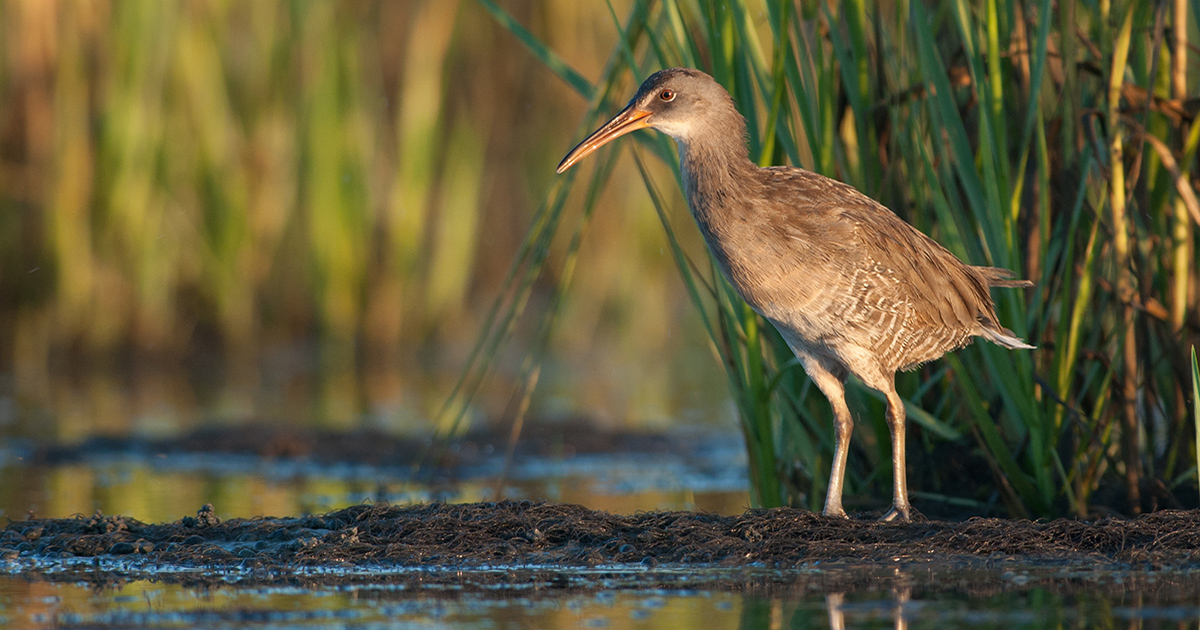
King Rails are an iconic secretive marsh bird species – seldom seen, occasionally heard – as they creep through the dense, tall vegetation in remnants of emergent marsh. Since the 1960’s, populations have declined an estimated 85%. Twelve states classify them as threatened or endangered; they are a Species of Greatest Conservation Need in over 30 State Wildlife Action Plans; and they are a priority species for several migratory bird Joint Ventures, including the Lower Mississippi Valley and East Gulf Coastal Plain, where they are identified as a priority waterbird species in the East Gulf Coastal Plan Waterbird Plan. Wetland habitat loss, alteration of hydrology, and difficulty in maintaining and managing productive hemi-marsh are highlighted as explanations for the precipitous decline.
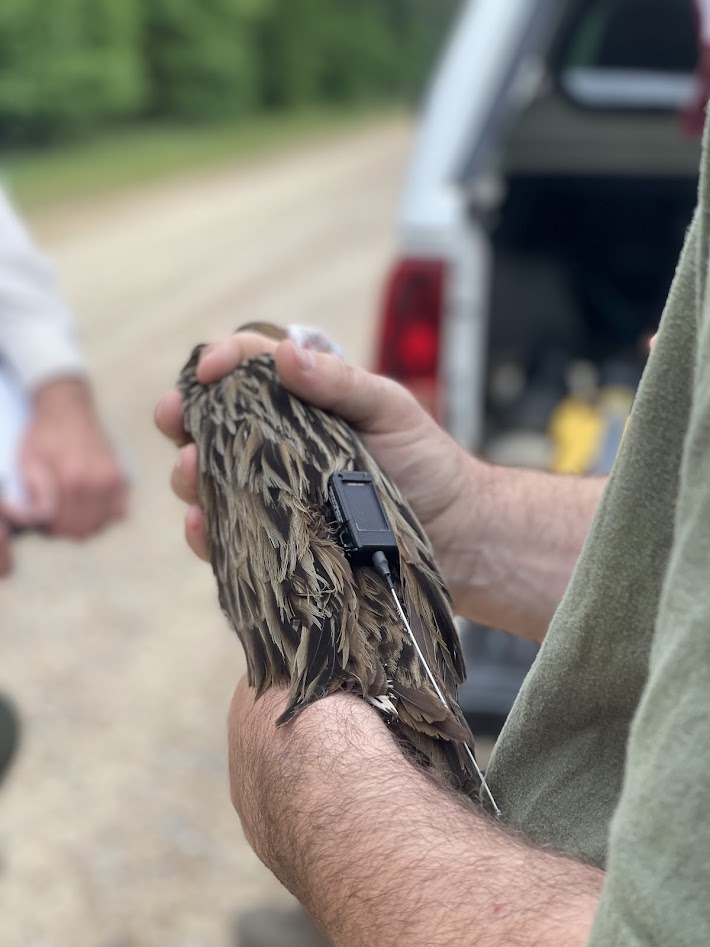
A group of researchers, biologists, and managers – coordinated through the Lower Mississippi Valley Joint Venture – are collaborating on an ambitious project to better understand the migratory patterns and habitat use of King Rails across the upper Midwest, Mississippi Alluvial Valley and East Gulf Coastal Plain. The goal is to capture 18 King Rails across seven states and attach Ornitela solar-powered GPS-GSM transmitters, which will provide data on the daily movements and habitat use of these secretive birds. The team hopes to build momentum for additional research and is open to other collaborators. With additional information to inform conservation, the group anticipates promoting conservation of emergent marsh on public and private land for King Rails that will also benefit a suite of secretive marsh birds.
To date 12 King Rails have been captured and tagged; three were captured in 2025 and nine in 2026. Eight birds have been captured at Winous Point Marsh Conservancy in Ohio over the two years; two in Illinois, and one in Michigan. In the East Gulf Coastal Plain, researchers from Mississippi State University have captured one bird at Pearl River WMA in Mississippi and are targeting work at Tennessee National Wildlife Refuge and may extend work into Alabama.
Collaboration across geographic boundaries of these two Joint Ventures will provide a larger, landscape scale understanding of King Rail conservation needs. For additional information contact Anne Mini with the Lower Mississippi Valley Joint Venture ([email protected]) or Rob Holbrook with the East Gulf Coastal Plain Joint Venture ([email protected]).