
Our science is guided by several planning efforts and documents including the EGCPJV Landbird Conservation Plan, EGCPJV Waterbird Conservation Plan, and Open-pine Decision Support Tool. These plans and tools assist partners implement conservation projects that benefit wildlife and communities.
Conservation Plans
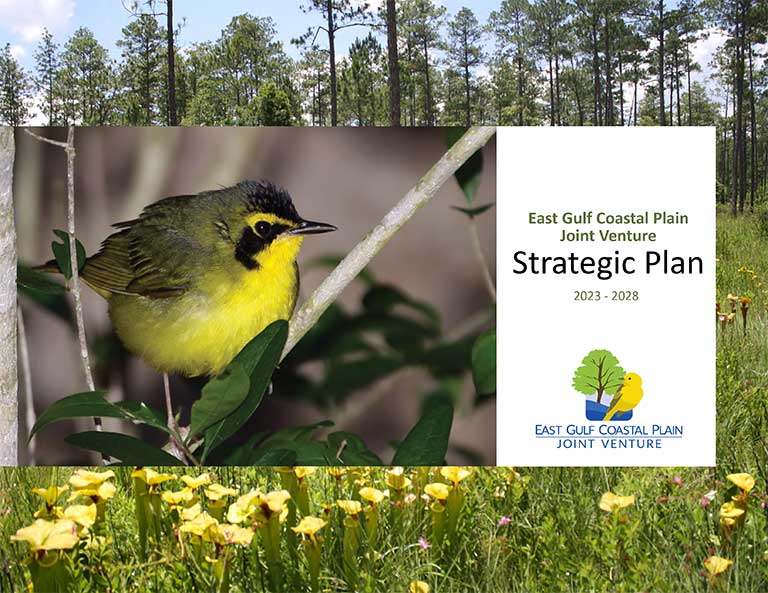
5 Year Strategic Plan
We have vital work to do in the coming years and we have made decisions about goals and approaches to achieving them. Learn about our 5 year plan.
Download The Plan
Landbird Conservation Plan
The Landbird Conservation Plan defines quantitative, spatially-explicit bird population and habitat objectives derived from biological planning and conservation design processes.
Download The Plan
Landbird Conservation Plan Summary
The Landbird Conservation Plan summarized here is part of a broader effort by the East Gulf Coastal Plain Joint Venture to provide partners with a suite of plans for landbirds, waterbirds, shorebirds, and waterfowl focused on sustaining healthy populations of birds in the East Gulf Coastal Plain.
Download The Summary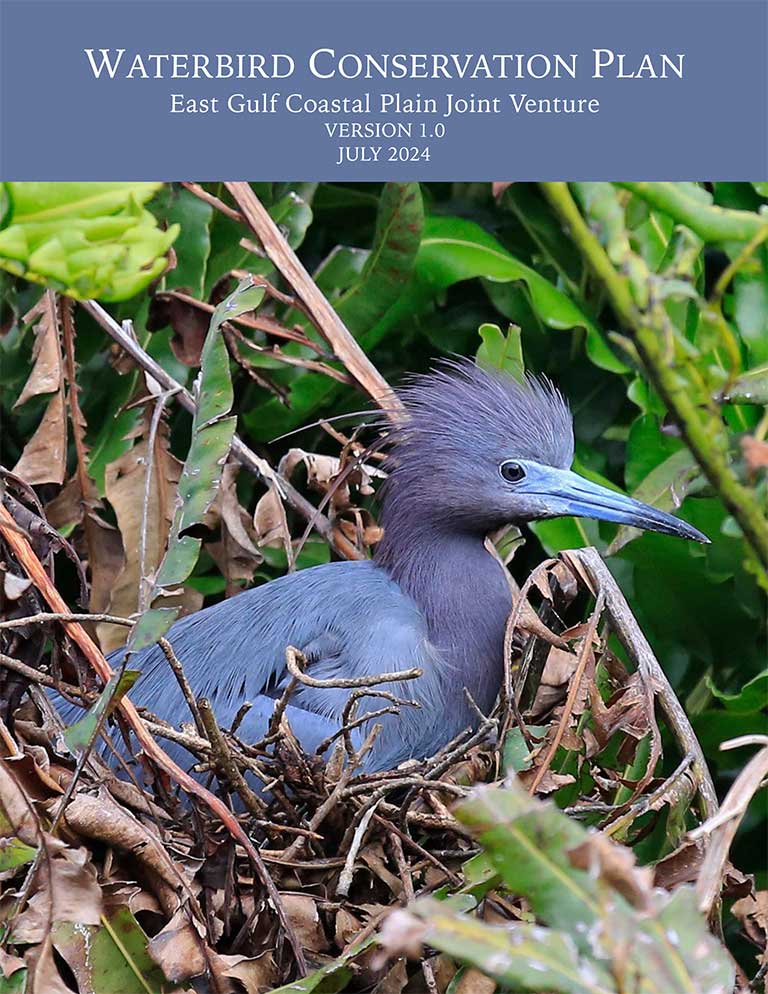
Waterbird Conservation Plan
The Waterbird Conservation Plan defines quantitative, spatially-explicit bird population and habitat objectives derived from biological planning and conservation design processes.
Download The Plan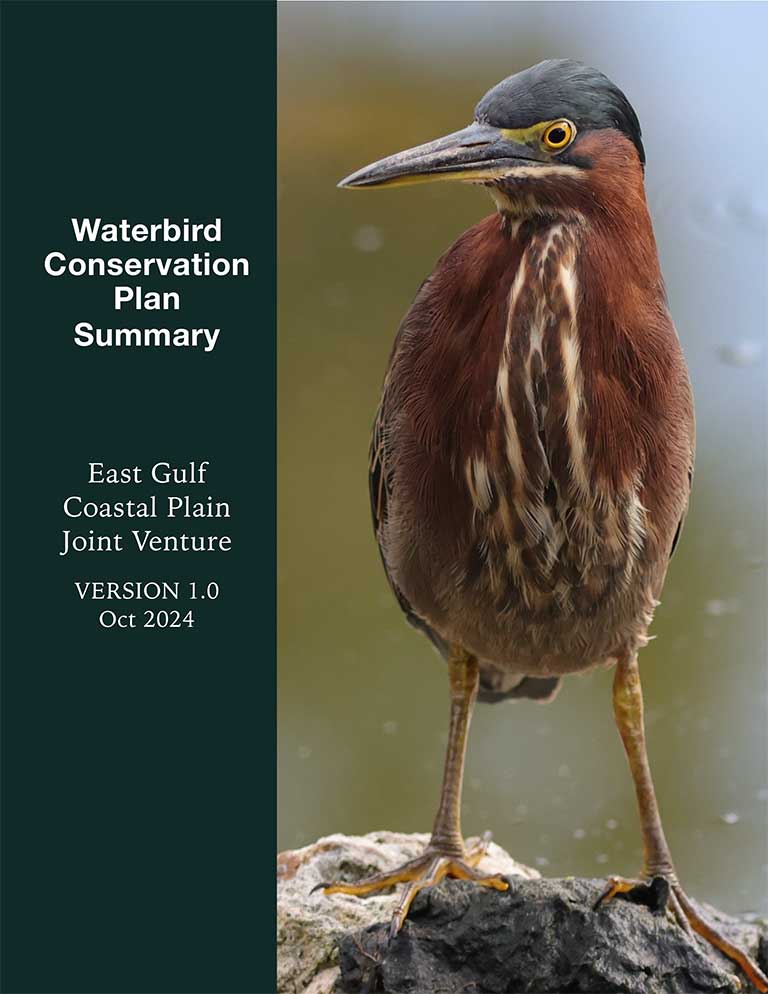
Waterbird Conservation Plan Summary
The Waterbird Conservation Plan is part of a broader effort by the East Gulf Coastal Plain Joint Venture to provide partners with a suite of plans for landbirds, waterbirds, and waterfowl focused on sustaining healthy populations of birds in the East Gulf Coastal Plain.
Other Plans

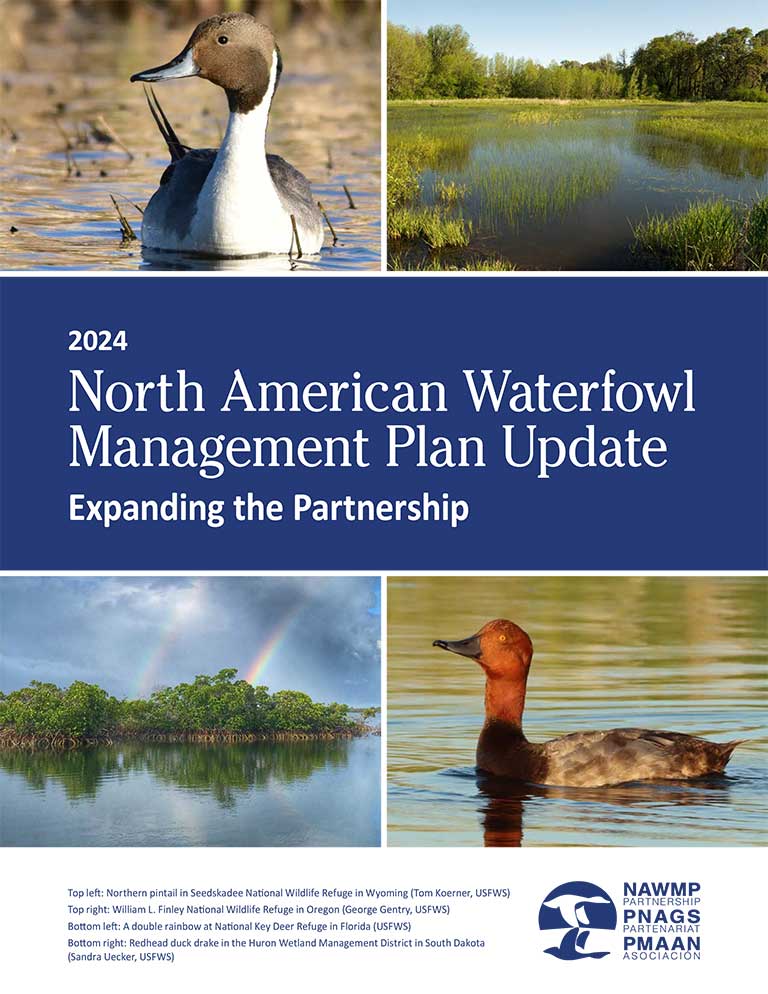
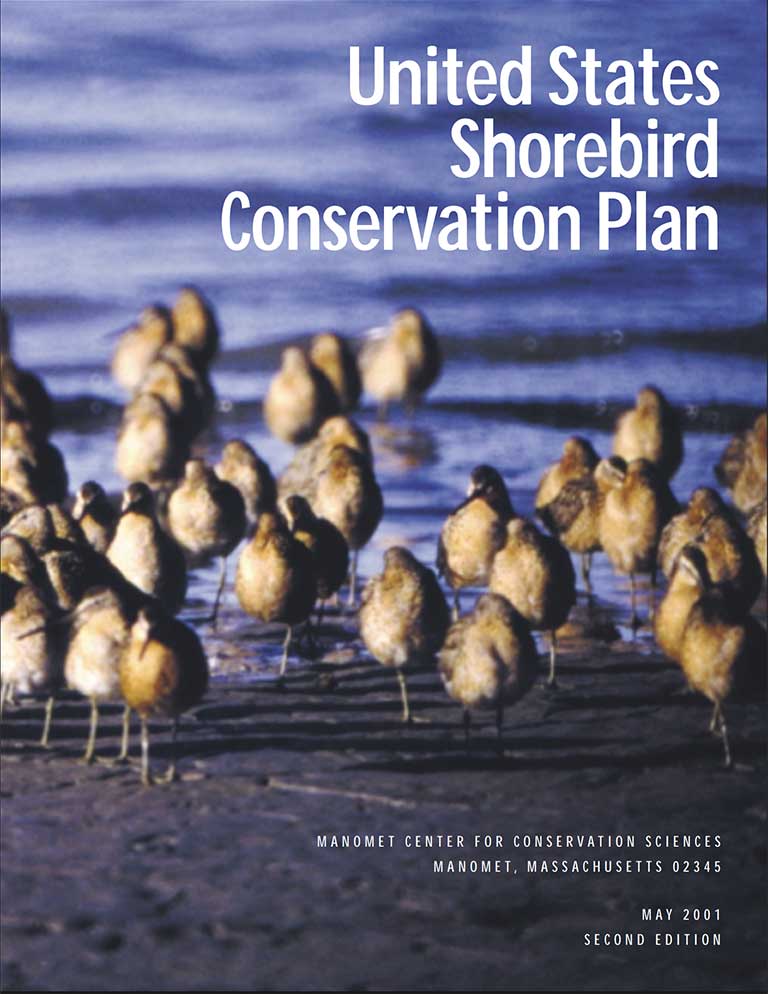
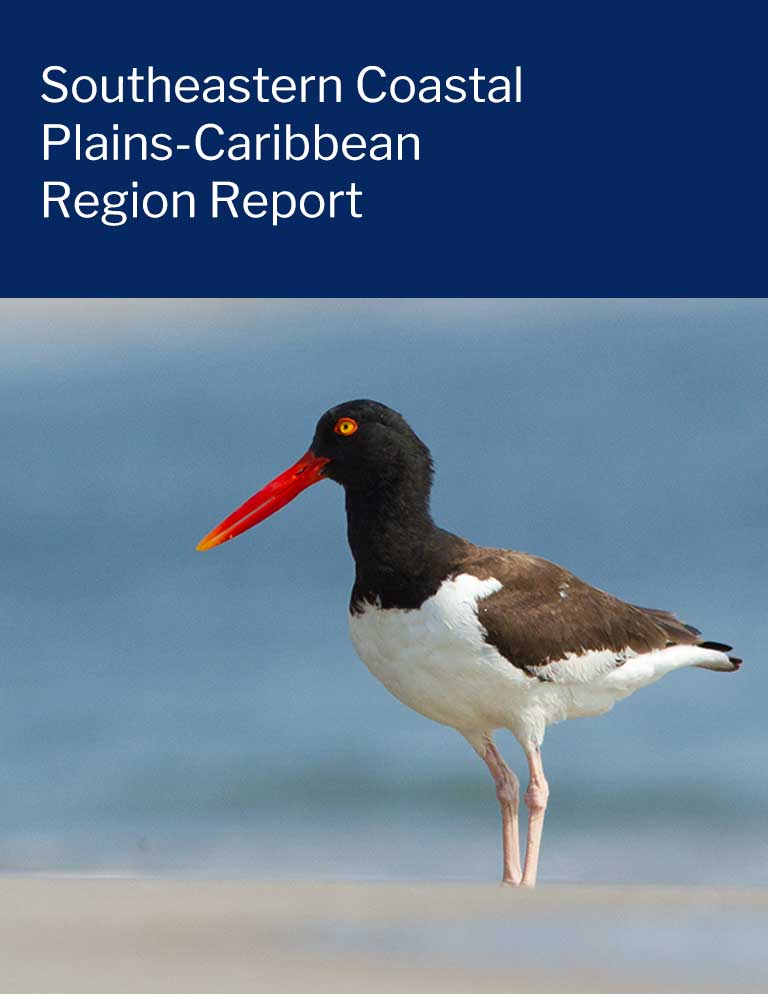
Tools

Prioritization of areas for open pine ecosystem restoration in the Southeastern United States
We used NLCD 2011, SSURGO, and SEGAP data to map the density of desired resources for open pine ecosystems and six focal species of birds and 2 reptiles within the historic range of longleaf pine east of the Mississippi River.

Open Pine Decision Support Tool
The Open Pine Decision Support Tool was developed to help guide decisions about where to maintain or restore open pine ecosystems for the greatest wildlife benefit. The model incorporates characteristics such as land form, hydrology, land use and land cover, soils, potential habitat for focal species, and putative source populations of focal species to map the density of desired resources for open pine ecosystems and 6 focal species of birds and 2 reptiles within the historic range of longleaf pine east of the Mississippi River.
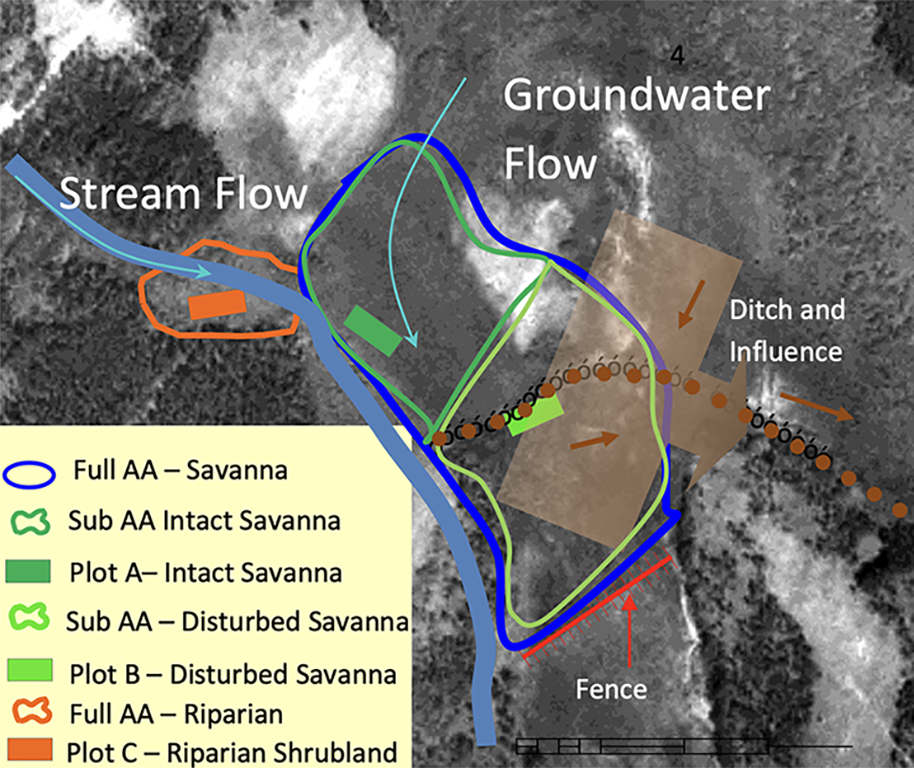
Field Manual for Rapid Assessment Metrics for Wildlife and Biodiversity in Southern Pine Ecosystems
This document describes a new, highly flexible, rapid, efficient approach to assessment of open pine ecosystems that can be applied by a wide range of landowners, land managers, wildlife technicians, biologists, and other natural resource scientists to help them understand their land’s contribution to biodiversity and target species’ wildlife habitat. Specifically, the protocols describe a way to apply field-based desired forest condition metrics within Southern Open Pine Ecosystems specifically for those managers whose primary goal is maintenance of biodiversity or enhancement of wildlife habitat for species dependent on open pine ecosystems.
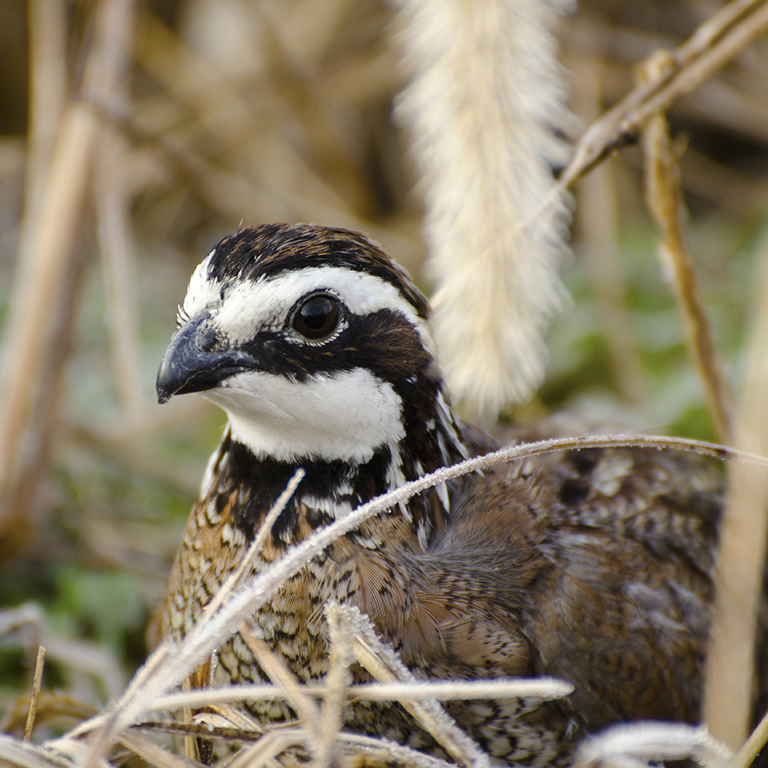
Rapid Assessment Metrics to Enhance Wildlife Habitat and Biodiversity within Southern Open Pine Ecosystems
In partnership with the Gulf Coastal Plain and Ozarks Landscape Conservation Cooperative (GCPO LCC), NatureServe, the U.S. Fish and Wildlife Service and the East Gulf Coastal Plain Joint Venture have developed desired forest condition (rapid assessment) metrics to measure wildlife habitat value and ecological integrity of tracts of land, with a primary focus on those lands being managed primarily for conservation. These desired forest condition metrics help conservation-minded landowners understand how their properties are contributing to the habitat needs of priority wildlife of southern open pine ecosystems, as determined by the Gulf Coastal Plain and Ozarks Landscape Conservation Cooperative (GCPO LCC).
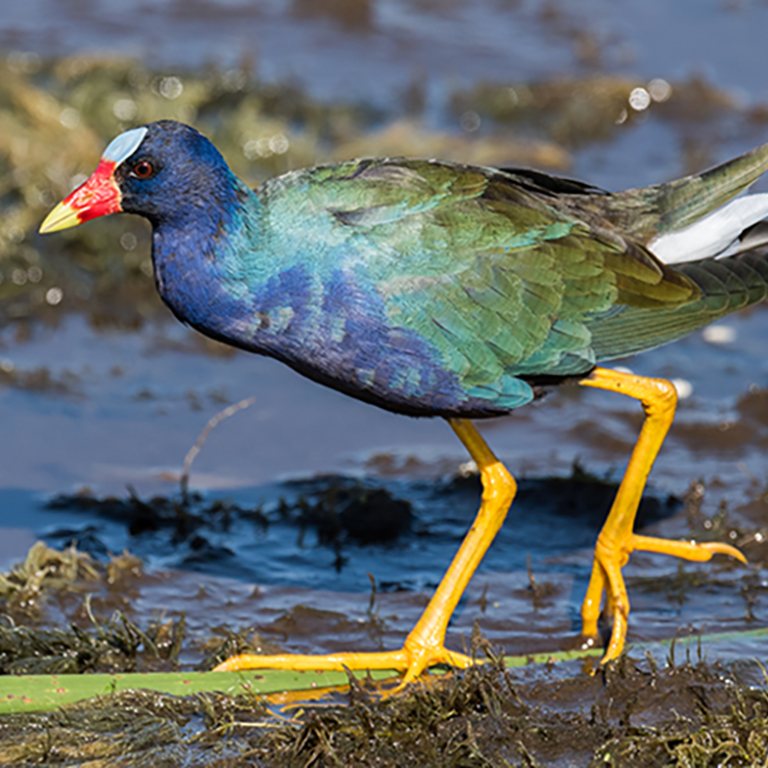
Waterbird Information Gap Priorities, Version 1.0
The Waterbird Information Gap Priorities document is intended to assist the EGCPJV and its partners better understand what information is needed about waterbirds in the JV, sift through which information gaps are more important, and identify possible opportunities to implement monitoring and research, where and when feasible, to reduce existing information gaps.
Prescribed Fire Management

A Burning Issue: Prescribed Fire and Fire-adapted Habitats of the East Gulf Coastal Plain
The EGCPJV’s vision for prescribed fire in the Southeast is to maintain and restore fire regimes through an increased use and acceptance of prescribed fire, since fire has historically and evolutionarily played a critical role in the health of East Gulf Coastal Plain upland systems and marshes.
Field Guides
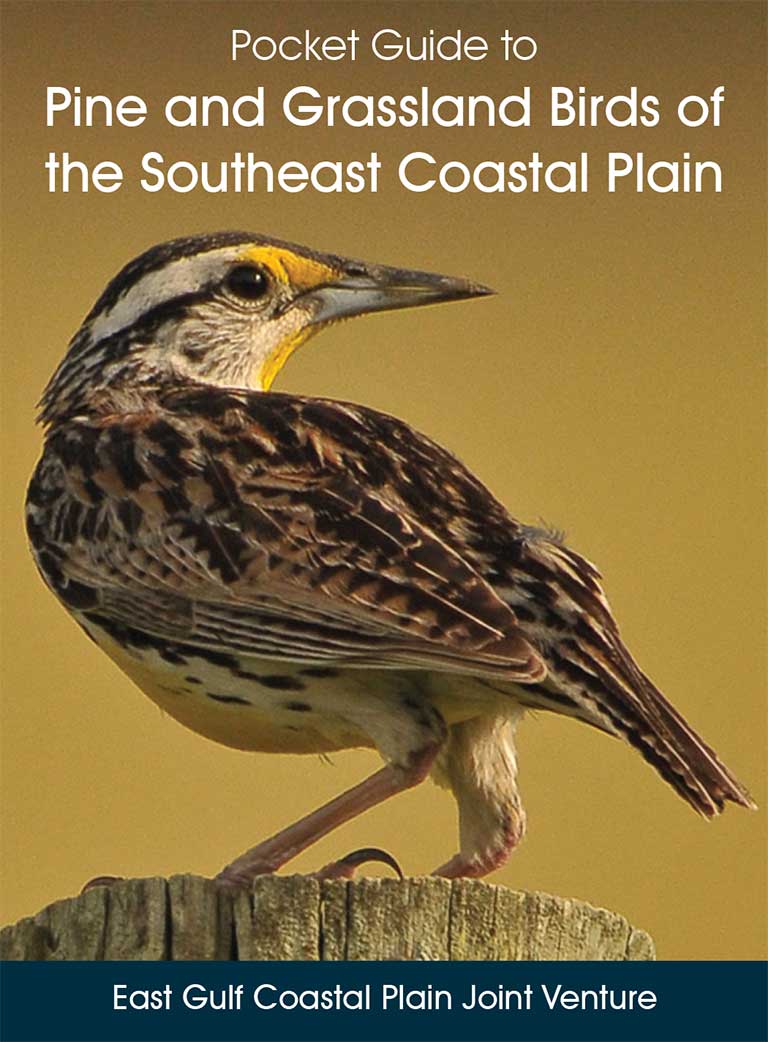
Pocket Guide to Pine and Grassland Birds of the Southeast Coastal Plain
This Pocket Guide to Pine and Grassland Birds of the Southeast Coastal Plain offers users a means to identify bird species associated with two ecologically important, yet threatened, upland habitats in the Southeast Coastal Plain of the United States: pine woodlands and eastern interior grasslands. The guide also provides conservation tips for maintaining and improving these habitats, which in turn benefits the birds which rely on them.
Download Pocket Guide