

JV staff and contractors hosted four in-person and two on-line meetings with participation from more than 65 partners during 2025. These meetings provided a venue to introduce the plan’s content and potential uses and served as a forum for partners to highlight local waterbird conservation efforts.
Additionally, participants discussed the barriers to waterbird conservation in their areas and shared suggestions on how the JV partnership might reduce obstacles and enhance waterbird conservation efforts in the East Gulf Coastal Plain. Challenges included a lack of knowledge about baseline waterbird populations and habitat use, perceived conflicts with other user groups, and the difficulty of creating and restoring habitat. Despite these challenges, the workshops refined information needs and clarified the roles the EGCPJV can fulfill in supporting waterbird conservation.
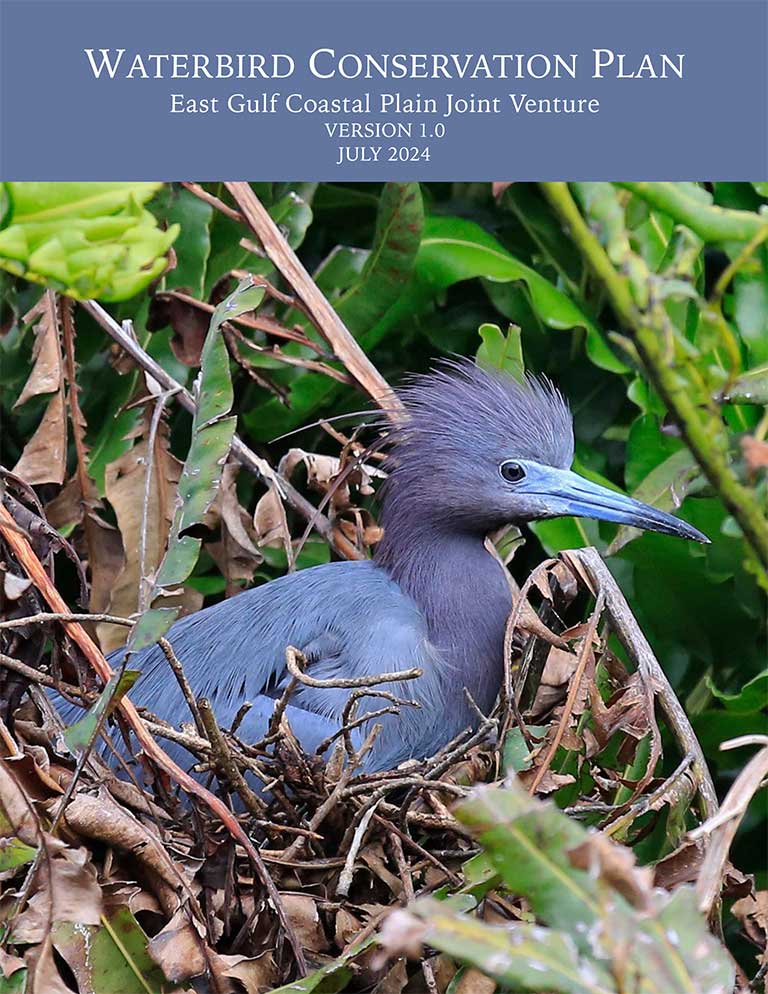
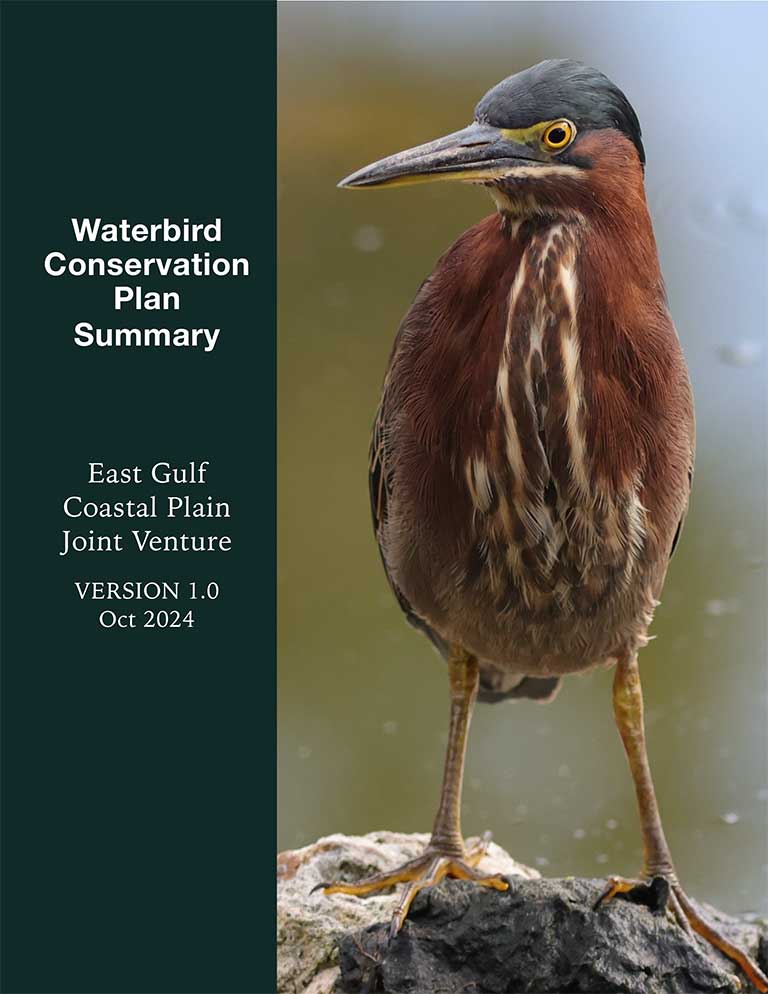
Waterbird Conservation Plan and Summary
The Waterbird Conservation Plan defines quantitative, spatially-explicit bird population and habitat objectives derived from biological planning and conservation design processes.
View the Plans