
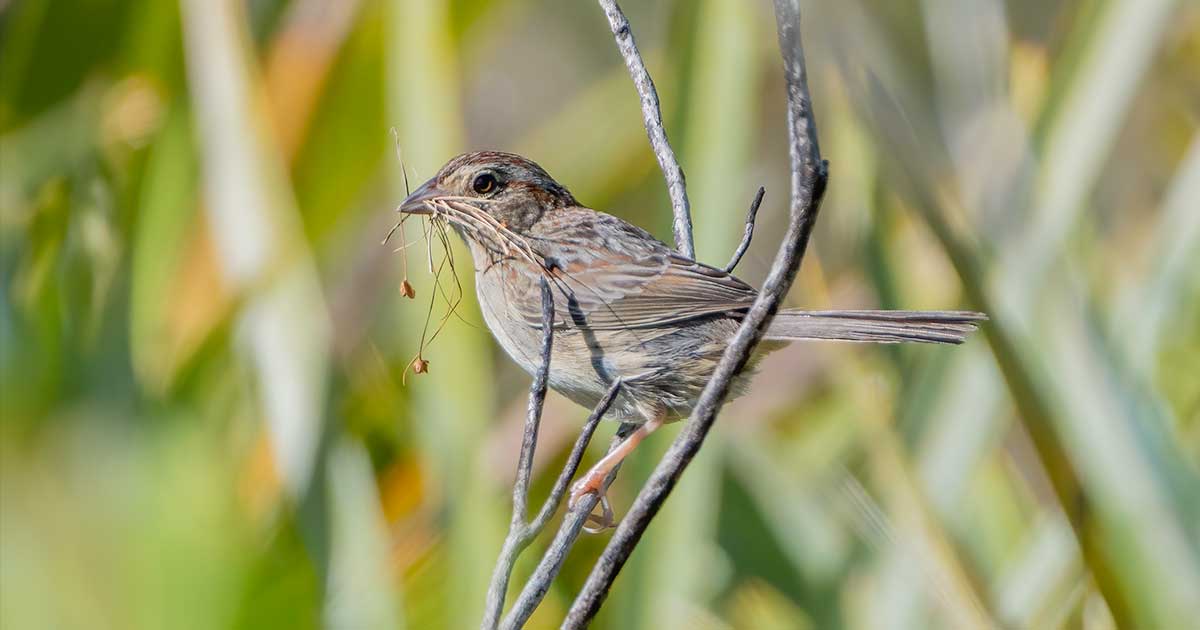
Since that time, the collaboration expanded into additional projects, including collecting data to support the National Bobwhite and Grassland Initiative’s Coordinated Implementation Program (CIP) in Alabama’s Conecuh National Forest and in the DeSoto National Forest of Mississippi, and surveying potential predators of shorebirds on Bon Secour National Wildlife Refuge (AL). Dr. Darby and his team have conducted breeding bird surveys and Bachman’s sparrow call-back surveys in the Conecuh National Forest. These projects have provided UWF students opportunities to gain experience in monitoring techniques while collecting important data for priority bird conservation efforts.
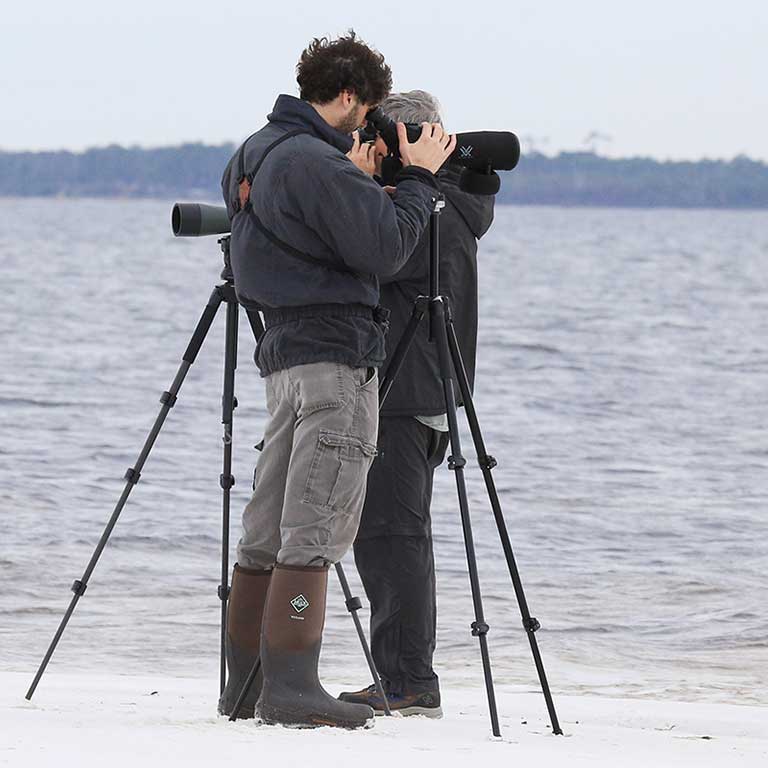
The Northwest Florida wintering waterfowl survey benefitted from the efforts of 30 UWF students and staff over an 8 year period. The data served as a foundation to secure funding from the Pensacola and Perdido Bays Estuary Program. The resulting report, presentation by Dr. Darby and student co-authors at a regional meeting, and poster presentation at an undergraduate research symposium all resulted from the UWF-EGCPJV collaboration and partnership. The Longleaf Alliance, an EGCPJV partner, funded the monitoring efforts on the Conecuh National Forest. Facilitation by the EGCPJV allowed 30 students to work on the Conecuh National Forest. Students were trained in protocols and basic field techniques and participated in data management and assisted with report production and presentations at scientific meetings. The partnership enabled Dr. Darby to seek matching support through UWF and funds from the Mertis “Sunny” Brown Scholarship, which is devoted to the study of birds. Over 20 UWF students have benefited from this scholarship working on UWF-EGCPJV projects.
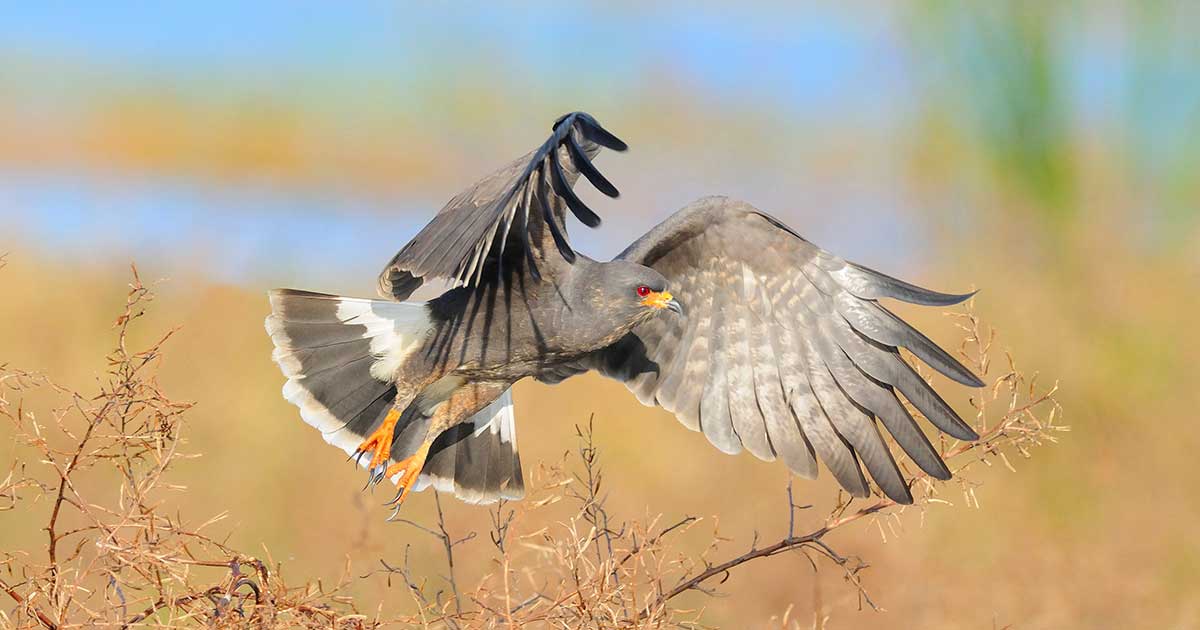
Dr. Darby is well-known for his long-term work on the endangered Snail Kite and its primary prey, the apple snail. He has been part of a team of biologists from federal and state agencies, non-profits, and academic institutions, in defining ecological measures of success including the status of Snail Kites and apple snails for the Everglades and other wetland restoration efforts in Florida. His work in central and south Florida involved 100 staff and students from several colleges and states over the decades. In the last ten years, he has created multiple opportunities for UWF students to engage in wildlife research and monitoring, training the next generation of wildlife professionals.
Dr. Darby retired in August 2025, after 38 years as an ecologist and with his last 26 years as biology faculty at UWF. He will continue at UWF in the status of Professor Emeritus, focusing on data analysis and publications. He will continue to engage students in field opportunities, including those in partnership with the EGCPJV. Dr. Darby has noted that for the first time in about 40 years, he can go fishing when conditions are at their best, not as much when his appointment book tells him where he should be. To learn more about Dr. Darby’s career check out the link below.
Celebrating Dr. Philip Darby’s Impactful Career | Biology in Action | University of West Florida