
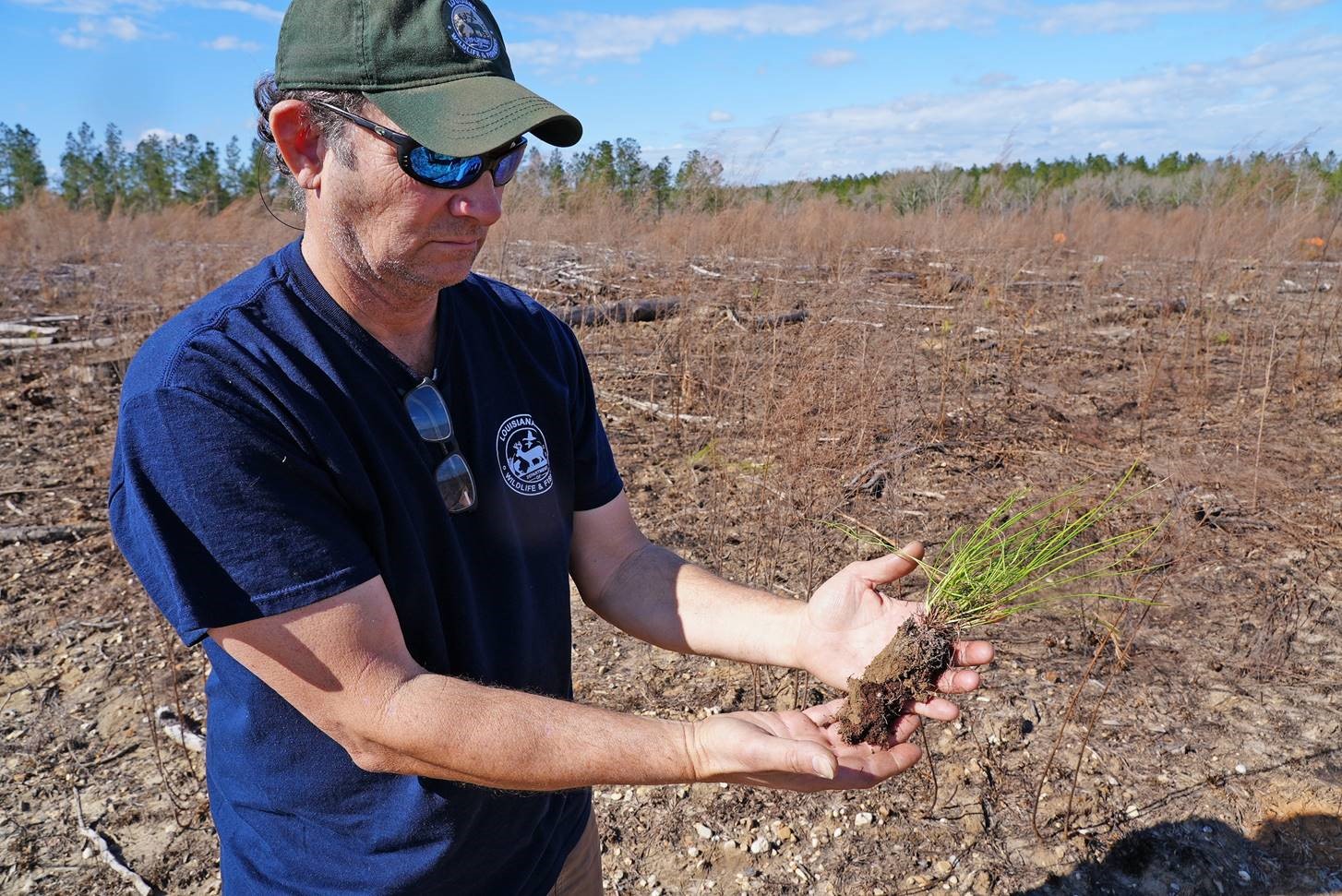
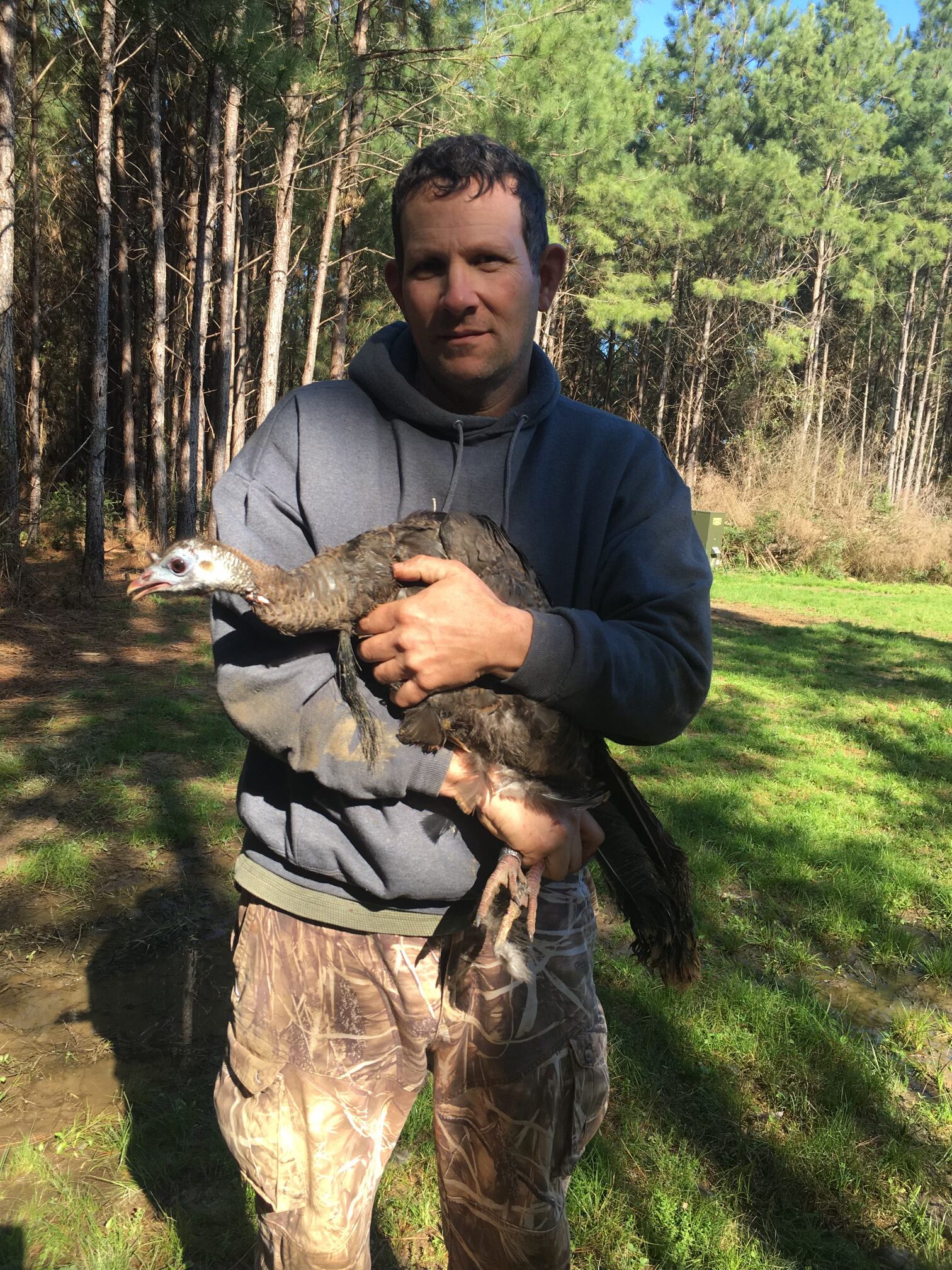
Donald “Duck” Locascio earned a Bachelor of Science in Forestry from Louisiana State University in 1994. His passion for wildlife prompted him to remain at LSU to pursue a master’s degree in wildlife—although some might argue that the opportunity to continue pursuing speckled trout, white-tailed deer, and wild turkeys had something to do with the decision. Whatever the motivation, Duck completed his master’s degree in 1997, studying Neotropical landbird use of man-made levees on Sabine National Wildlife Refuge in Cameron Parish, Louisiana.
The summer following graduation, Duck accepted a position with the Louisiana Department of Wildlife and Fisheries (LDWF) Wildlife Management Area (WMA) Forestry Program, beginning a career with the program that now spans 29 years. He started as a Biologist-Forester in Louisiana’s Mississippi Alluvial Valley (MAV), where he was responsible for forest management on several WMAs. His work included conducting forest inventories and habitat assessments, developing forest management prescriptions, marking timber to improve wildlife habitat, monitoring timber harvests, and restoring bottomland hardwood forests through reforestation.
Duck was later promoted to Biologist Supervisor and then Biologist Manager, with responsibility for forest management on all LDWF WMAs within the MAV. In 2012, he became WMA Forestry Program Manager and today oversees forest management on all 545,695 acres of LDWF-owned forestland. He is quick to point out that the success of the program—and much of the success he has enjoyed throughout his career—is rooted in the work of those who came before him and the dedicated foresters, biologists, and technicians who continue implementing habitat management on Louisiana’s WMAs today.
In addition to serving on the East Gulf Coastal Plain Joint Venture Board, Duck serves on the board of the Southeast Conservation Adaptation Strategy, chairs the Lower Mississippi Valley Joint Venture (LMVJV) Forest Resource Conservation Working Group, and serves on the Southeastern Association of Fish and Wildlife Agencies Forestland Resources Technical Committee.
Throughout his career, Duck’s work has centered on a straightforward goal: maintaining healthy, diverse, and sustainable forests that provide quality wildlife habitat, wildlife-oriented recreational opportunities, and long-term forest productivity. He believes active forest management is one of the most important tools available to wildlife managers. By deliberately manipulating forest structure and composition, managers can create and maintain desired habitat conditions across the landscape—supporting greater wildlife production, biological diversity, and healthier, more resilient forests.
For Duck, that connection between forestry and wildlife management has been the common thread throughout his career. Whether marking timber on a WMA, developing forest management strategies, or working with conservation partners across the Southeast, the objective remains much the same: put sound forest management on the ground in ways that create better habitat for wildlife and leave healthier forests for the future.