
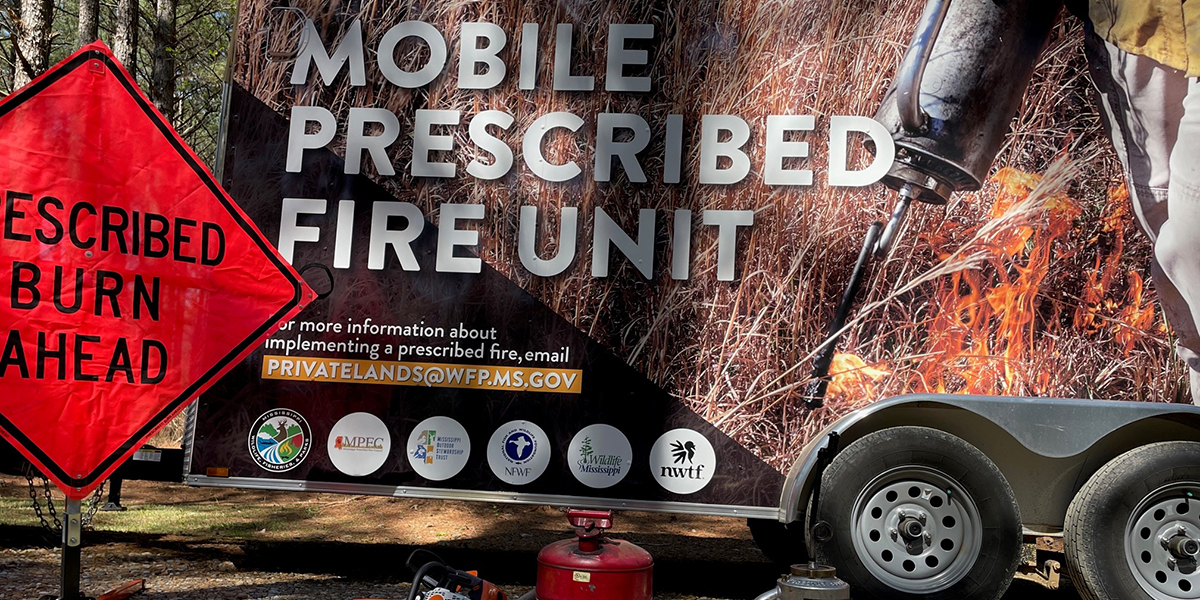
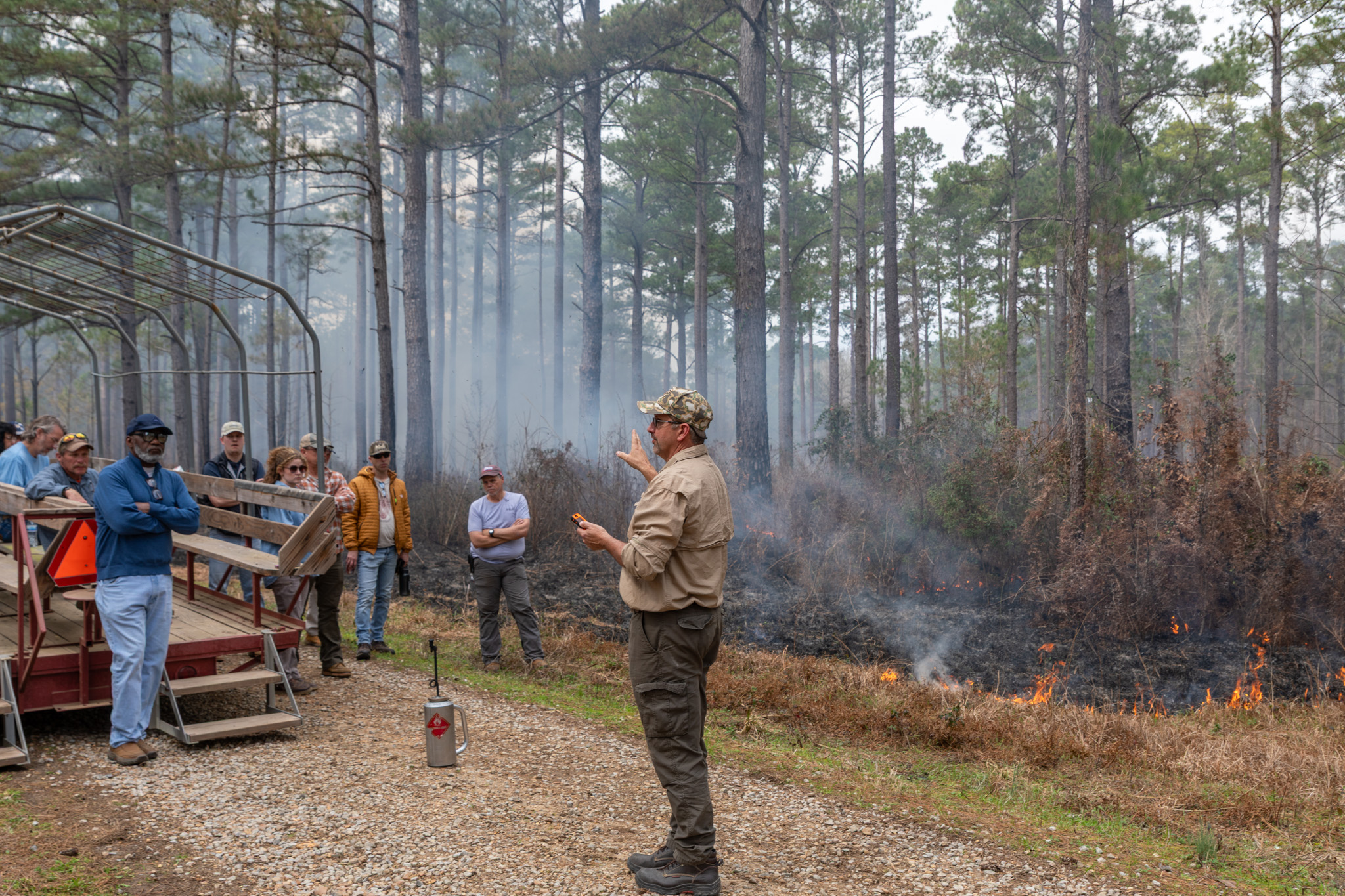
Fire-dependent habitats are among the most biologically diverse natural communities in the East Gulf Coastal Plain. From longleaf pine savannas in the Piney Woods to Blackland Prairies and open woodlands of the Loess Plains, these systems developed with frequent fire. Without it, woody vegetation encroaches, native groundcover declines, and habitat is lost for wildlife that depend on open, fire-maintained plant communities.
A partnership led by the Mississippi Department of Wildlife, Fisheries, and Parks (MDWFP) is addressing that challenge through an “America the Beautiful Challenge” grant administered by the National Fish and Wildlife Foundation. The project, Enhancing Fire-Dependent Plant Communities of the Piney Woods, Blackland Prairie, and Loess Plains of the East Gulf Coastal Plain, is designed to restore and manage approximately 90,000 acres of fire-dependent habitat across Mississippi, Louisiana, and Alabama.
On private lands, the project builds upon Mississippi’s “Fire on the Forty” model, which combines technical guidance with financial incentives for landowners to implement practices such as control of invasive plants and undesirable wood vegetation. Projects are strategically ranked using landscape-scale conservation priorities identified in plans including State Wildlife Action Plans to benefit high-priority bird species identified in the East Gulf Coastal Plain Joint Ventre’s Landbird Conservation.
The project also targets conservation on Wildlife Management Areas and other public lands across all three states (Mississippi, Alabama, and Louisiana), where habitat treatments and infrastructure improvements complement private-land conservation. Together, these efforts benefit a suite of fire-dependent wildlife, including Northern Bobwhite, Bachman’s Sparrow, Prairie Warbler, and numerous other Species of Greatest Conservation Need. Thus far, the partners have impacted more than 45,000 acres—more than halfway toward the project’s goal.
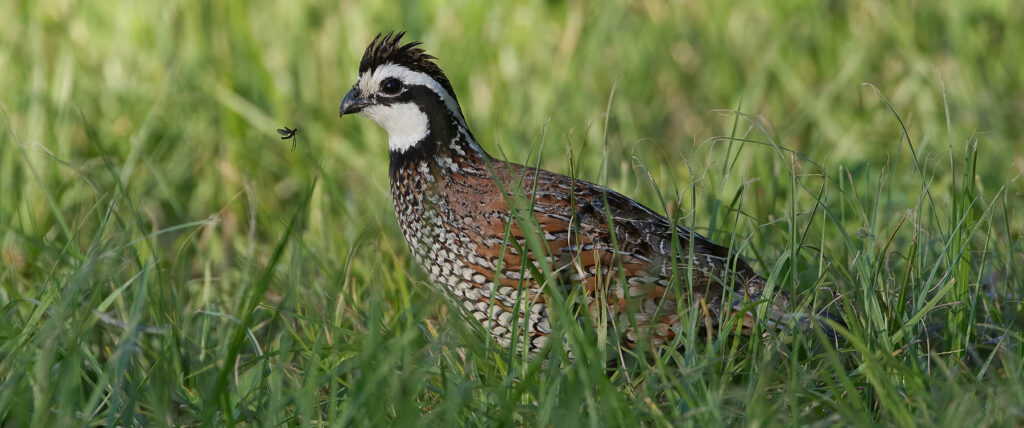
Northern Bobwhite are fire dependent species.
Additionally, the project strives to rebuild a culture of prescribed fire through including landowner workshops, professional training, development of Prescribed Burn Associations, and strengthening the private prescribed-fire workforce by connecting landowners with private burn contractors.
This multi-state effort emphasizes work across boundaries with collaboration among state wildlife agencies in Mississippi, Alabama, and Louisiana; conservation organizations including the National Wild Turkey Federation, Wildlife Mississippi, The Nature Conservancy; and private forest-industry partners including Weyerhaeuser and Westervelt. The project has helped leverage other conservation investments, including a Regional Conservation Partnership Program project with Natural Resources Conservation Service and the National Bobwhite and Grasslands Initiative and an Outdoor Stewardship Trust Fund grant supporting a habitat crew through Quail Forever.
Ultimately, success will be measured by acres treated, but an equally important goal is to increase the longer-term sustainability and capacity of landowners, professionals, agencies, and organizations to implement prescribed burning long after the grant ends. For fire-dependent wildlife and plant communities of the East Gulf Coastal Plain, restoring the culture of fire is a critically important aspect of longer-term sustainable habitat conservation.